A Viking Oven Sensor Is Replaced, Not Recalibrated
The control is not lying to you. It is faithfully holding the temperature its probe reports. When the probe has drifted, offsetting the control only hides it.
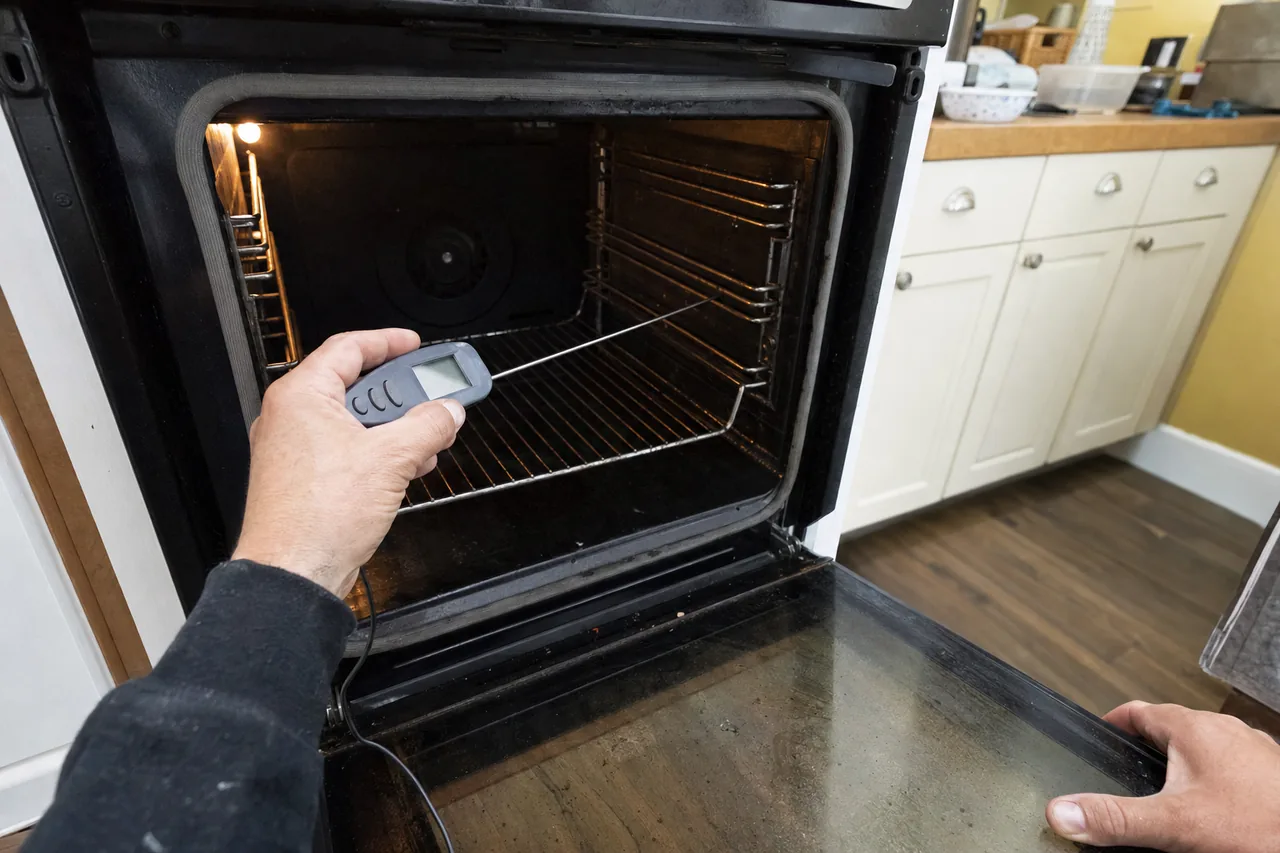
An oven has no direct knowledge of its own temperature. It has a resistance probe in the cavity, and a control that heats until the resistance it reads corresponds to the setpoint. The whole system is only ever as accurate as that one component.
When the probe drifts, nothing appears to be wrong. The display reads 350. The control is satisfied. The oven is at 325, or at 380, and it will hold there all afternoon with complete confidence. There is no fault to report because, from inside the loop, there is no fault.
Why the offset adjustment is not a repair
Most ovens allow the user to apply a calibration offset — a few degrees in either direction, to suit personal preference. It is a legitimate feature and it is not a fix for a drifted probe.
Two reasons. First, a probe that has drifted is not usually wrong by a constant amount across its range; it is wrong by different amounts at different temperatures. An offset that makes a 350 bake correct will leave a 450 roast wrong in the other direction. Second, a probe that has drifted once is a probe that is still moving. Dialling in an offset today means dialling in another one next season, and in the meantime the real condition has been concealed.
If a measurement shows the probe has left tolerance, the probe gets replaced.
What we measure before we order anything
The diagnostic on a temperature complaint is short and it settles the question.
We put an independent measurement in the cavity and compare it against what the control believes, at more than one setpoint. Then we read the probe’s resistance directly and compare that against its specified value at a known temperature. Between those two readings, three outcomes separate cleanly:
The probe reads correctly and the cavity is at the wrong temperature — then the loss is physical. A door not pulling flush, a failed gasket, or an element heating from one direction only.
The probe is out of specification — replace the probe.
The probe is in specification and the control is not acting on it correctly — now we are looking at the control, and that is a much larger number, which is precisely why it is the last conclusion rather than the first.
We do not order a part before this is finished. That is the whole point of a flat, credited diagnostic: the incentive is to find the fault, not to guess at one that happens to be in the van.
Why the genuine OEM part
A temperature probe is a cheap component with an expensive job. Its value is entirely in its resistance curve matching what the control expects across the full range, and a generic part that matches at one point may not match at three hundred degrees higher. A substituted probe that is slightly wrong reproduces the exact complaint you called about, and it does it in a way that is very hard to find afterwards, because everyone assumes the new part is correct.
We fit genuine OEM parts for this reason and not as a slogan. It carries 365 days of parts coverage and 90 days on labour.
The order of likelihood
An oven that will not hold its setpoint is a probe, a door, an element or a control — in roughly that order of likelihood on the equipment we see. Working the list in that order is most of what a competent diagnosis is, because each step is cheaper and faster to rule out than the one after it.
The probe comes first because it is the only one of the four that can be wrong while every other part behaves correctly. The door comes second because it takes two minutes to check and produces an almost identical complaint. The element comes third, and it usually declares itself visually or on a resistance reading. The control comes last, because a control that has genuinely failed is rare alongside three parts that fail routinely, and because it is the most expensive of the four to be wrong about.
Terms
Flat $80 diagnostic, credited toward the repair when you approve the work. A written estimate before any part is ordered or any labour is billed. Genuine OEM parts, 90 days on labour and 365 days on parts.
What does this wall oven work cost?
The bands that fit this fault, not the whole book. Parts and labour together.
| Work | Usual range | What moves it inside the band |
|---|---|---|
| Finding the fault | $80 | Nothing moves it. One figure for any appliance anywhere in the radius. Flat diagnostic fee, credited toward the repair when you approve the work. |
| Oven thermostat or heating element | $190–$610 | Whether the cavity has drifted out of tolerance or an element has failed open — and whether the oven has to come out of its opening to be reached. |
| Control board or touch panel | $410–$1,000 | The board carries most of it. What is left is availability: a long-superseded model line is the slow, dear case. |
Parts and labour together, for this equipment in Orange Park and the rest of the radius. A band is not a quote: the figure you approve is written down once the appliance has been measured, and it lands inside the band above unless you are told on the day why it does not. The whole book, and the replace-instead comparison.
What this one raises
- Why not just set an offset in the control?
- Because an offset corrects the reading rather than the measurement. A probe that has drifted once will keep drifting, so the offset that looks right this season conceals the real condition and is wrong by the next. The probe is replaced and the new one is verified against a measured cavity.
- What does a verified oven actually mean here?
- That an independent probe went into the cavity before and after the part was changed, and that the numbers agreed at the end. A sensor swapped without that check has only moved the error somewhere no one is looking.
- What does this repair cost in Orange Park?
- $80 flat to find the fault, and that is the whole bill if you decide to stop there. Where the work goes ahead, the bands that apply are oven thermostat or heating element $190–$610, control board or touch panel $410–$1,000, parts and labour together. You get a written estimate before any part is ordered or any labour is billed.
The service this belongs to
- Rangesrange
- Wall Ovenswall-oven
Where this comes up
- Orange Park32073
- Oakleaf Plantation32065
- Eagle Harbor32003
Book a diagnostic
Tell us the model line and the symptom. We schedule Viking work only, so the van carries the right parts.
- Diagnostic
- $80
- Labour warranty
- 90 days
- Parts warranty
- 365 days
Flat diagnostic fee, credited toward the repair when you approve the work. You get a written estimate before any part is ordered or any labour is billed.
Monday to Friday 8:00 am to 6:00 pm, Saturday 9:00 am to 4:00 pm. Closed Sunday.